Turkey's Economy in Early 2025: Policy Shifts, Market Moves, and Political Headwinds
Introduction: Navigating a Complex Landscape
Entering 2025, the Turkish economy continued its journey through a period of significant adjustment. Building on the policy shifts initiated in mid-2023, the first quarter of the year brought further developments in monetary tightening, fiscal management, and market reactions. However, this period was also marked by notable political events that added another layer of complexity to the economic outlook, demanding a cool-headed assessment from observers and investors.
Monetary Policy and Inflation Dynamics (Q1 2025)
The Central Bank of the Republic of Turkey (CBRT) remained central to the economic narrative. Following its aggressive rate hikes through 2024, the February 2025 interest rate decision was closely watched. While specific figures require confirmation, the CBRT’s stance continued to signal a commitment to combating inflation, likely maintaining tight monetary conditions. This resolve was tested by the inflation data released in March 2025, which provided critical insights into whether the disinflationary trend was taking hold as policymakers hoped. Managing inflation expectations remained a key challenge, requiring consistent and credible policy action.
Currency, Markets, and Investment Flows (Q1 2025)
The performance of the Turkish Lira and the Borsa Istanbul index during February and March 2025 reflected the interplay of domestic policy and global sentiment. While the orthodox policies aimed for stability, market volatility persisted, influenced by inflation figures, central bank signals, and geopolitical factors. Encouragingly, new foreign investment figures announced in February 2025 offered a gauge of international confidence in Turkey’s economic program. Simultaneously, the government’s fiscal policy update in March 2025 outlined its strategy for managing public finances amidst tight monetary policy, aiming to provide a trustworthy anchor for the economy.
Political Headwinds and Reserve Management: The İmamoğlu Factor
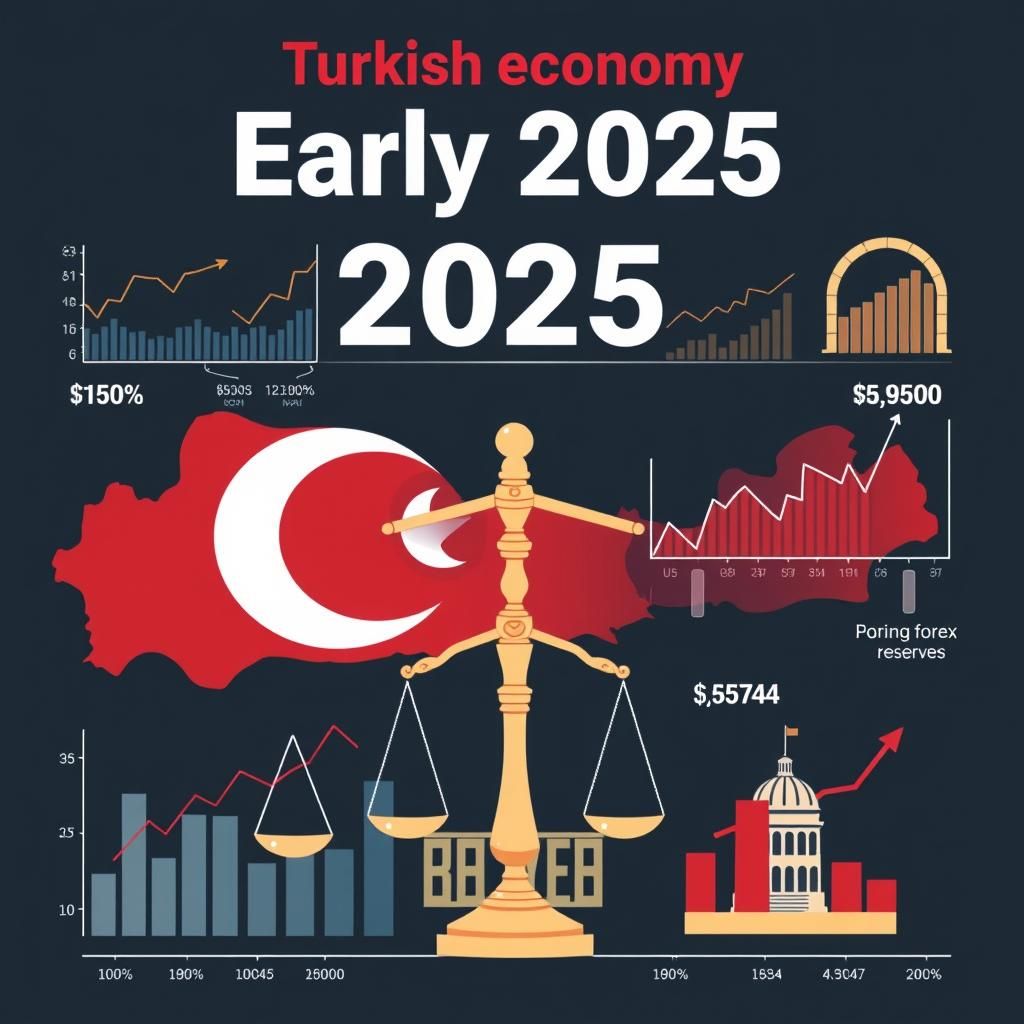
Beyond pure economics, a significant political development occurred with the reported arrest of Istanbul Mayor Ekrem İmamoğlu. While the specific circumstances and timing require verification, such an event inevitably introduces political uncertainty. For the economy, this translates into heightened political risk perception, potentially impacting investor sentiment and capital flows. Reports emerged suggesting that substantial Central Bank reserves, potentially amounting to $35 billion, were utilized in an attempt to stabilize the Turkish Lira amidst the ensuing market pressure. Such interventions, if confirmed, highlight the significant economic costs associated with political instability and raise questions about the sustainability of reserve levels, underscoring the challenge of maintaining market confidence during turbulent times. Navigating these political headwinds became an additional, critical challenge for economic policymakers aiming to maintain stability and confidence.
Conclusion: Balancing Acts in Early 2025
The first quarter of 2025 demonstrated that Turkey’s economic path involves a delicate balancing act. Policymakers juggled the need for continued monetary tightening against growth considerations, while fiscal discipline and careful reserve management remained paramount. Market performance reflected this complex reality, further influenced by political developments like the İmamoğlu situation and its alleged economic fallout. Looking ahead, maintaining policy credibility, managing inflation, attracting sustainable investment, preserving foreign exchange reserves, and navigating the political landscape remain the core challenges for ensuring a resilient and prosperous Turkish economy